
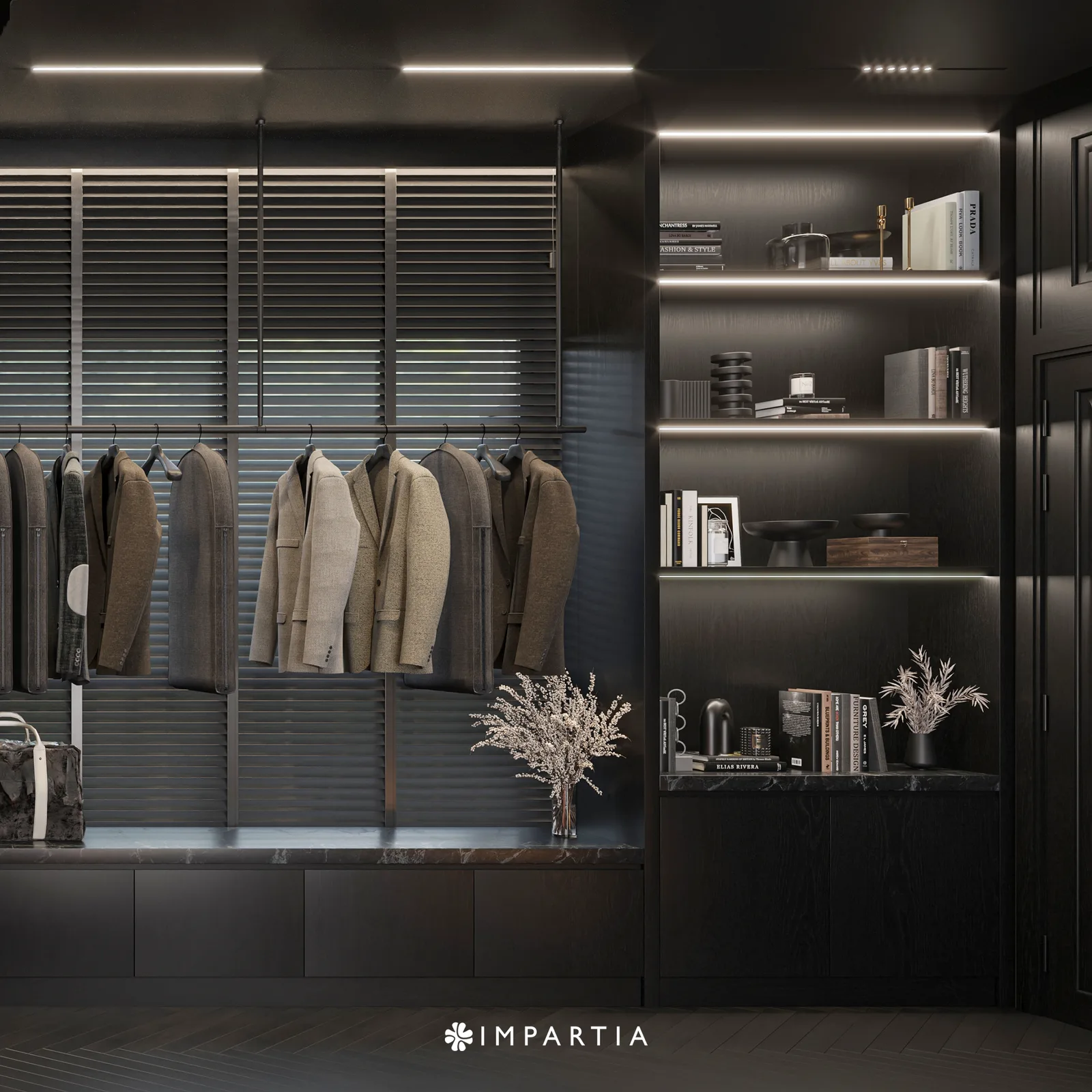
Begin with what is actually used
Before choosing door profiles or materials, look at what needs to be reached every day, what should stay hidden, and how the space may need to change over time.
These answers determine the right depth, shelf heights, openings, and hardware for the people who will actually use them.
The lines should belong to the room
Built-ins carry visual weight. They should be designed alongside ceilings, walls, doors, lighting, and furniture so they feel embedded in the space rather than added later.
Invisible details shape everyday use
Structure, hardware, joints, ventilation, and service access all help the work look resolved at handover and continue to perform well over time.